The Cleaved-COL4A3 (L1425) antibody is an essential reagent for studying type IV collagen dynamics, particularly in the context of basement membrane integrity and kidney diseases. Type IV collagen, a crucial structural component of the basement membrane, undergoes proteolytic cleavage, yielding biologically active fragments such as the L1425 peptide. This antibody specifically targets the cleaved form of COL4A3, enabling researchers to investigate its role in pathological and physiological processes.
Role of Cleaved COL4A3 in Biological Systems
Cleaved COL4A3 plays a significant role in matrix remodeling, cellular adhesion, and signaling. Its involvement in kidney diseases, particularly Alport Syndrome and other glomerular pathologies, makes it a critical focus in nephrology research (NIH, NIDDK).
Applications of Cleaved-COL4A3 (L1425) Antibody
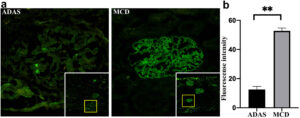
- Nephrology Research: The antibody helps elucidate the role of COL4A3 in glomerular basement membrane disorders (PubMed, NIDDK).
- Tissue Remodeling Studies: Investigates the impact of matrix degradation on tissue integrity and fibrosis (NCBI, NIGMS).
- Cancer Research: Explores how cleaved COL4A3 fragments influence tumor microenvironments (Cancer.gov).
- Biomarker Identification: Tracks cleaved COL4A3 as a potential diagnostic marker for kidney diseases (ClinicalTrials.gov, FDA).
Features of Cleaved-COL4A3 (L1425) Antibody
- High Specificity: Targets the L1425 fragment with minimal cross-reactivity, ensuring accurate detection.
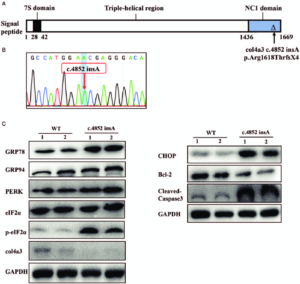
- Wide Compatibility: Validated for immunohistochemistry, Western blotting, and ELISA (NIH).
- Species Versatility: Effective in human, mouse, and rat samples, facilitating comparative studies (NCBI).
Techniques Utilizing the Antibody
- Western Blotting: Detects cleaved COL4A3 in tissue lysates, aiding in protein quantification (NIH).
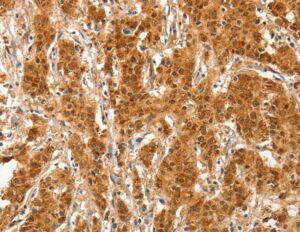
- Immunohistochemistry: Maps the spatial distribution of COL4A3 cleavage in kidney and basement membrane tissues (Harvard, Stanford).
- ELISA Assays: Quantifies cleaved COL4A3 levels in biological fluids, aiding biomarker discovery (PubMed).
Research Highlights
- Kidney Diseases: Alterations in COL4A3 cleavage are implicated in the pathogenesis of Alport Syndrome and other nephropathies (NIDDK).
- Fibrosis Studies: COL4A3 cleavage is a critical step in extracellular matrix degradation, influencing fibrosis progression (NIH).
- Cancer Metastasis: Cleaved COL4A3 fragments modulate tumor cell adhesion and migration, impacting metastasis (Cancer.gov).
Key Resources
Conclusion
The Cleaved-COL4A3 (L1425) antibody is a powerful tool for understanding basement membrane biology and its implications in disease. By enabling precise detection and quantification of cleaved COL4A3, this antibody supports research into nephrology, fibrosis, and cancer. Researchers can leverage its high specificity and broad applicability to uncover novel insights into basement membrane dynamics and related pathologies.
For further exploration, consult these resources:
Utilizing the Cleaved-COL4A3 (L1425) antibody will advance your research into critical cellular and molecular mechanisms underlying health and disease.